Breathwork has transcended the “alternative” label to become a cornerstone of modern biohacking and holistic healing. From the high-performance executive seeking mental clarity to the soul-searcher on a Balinese retreat, thousands are turning to the breath to unlock deep emotional releases and physiological resets.
Is Breathwork Safe? A Guide to Contraindications and Why a Private Facilitator is Essential for Beginners
However, as the popularity of practices like Holotropic Breathwork, Wim Hof, and Rebirthing grows, so does the need for a grounded, professional conversation regarding safety. At Private Class Bali, we believe that the most profound transformations occur when the “container” is safe, expert-led, and tailored to the individual.
In this guide, we explore the science of how breathwork affects the body, the vital contraindications to be aware of, and why your first journey should always be guided by a professional eye.

The Physiology of the Breath: More Than Just Oxygen
To understand safety, we must understand what happens to our biochemistry during conscious, connected breathing. When we alter our respiratory rhythm—particularly through hyperventilation-style techniques—we induce a state called Respiratory Alkalosis.
- CO2 Washout: As you exhale rapidly, you “wash out” carbon dioxide (CO2).
- Blood pH Shift: This causes the blood pH to rise, making it more alkaline.
- Vaso-constriction: Higher alkalinity can cause blood vessels to constrict slightly, often leading to “tetany” (tingling or cramping in the hands and feet).
While this state is often where the “magic” happens—leading to visionary experiences or emotional breakthroughs—it is a significant physiological shift. For a healthy individual, this is a controlled stressor that builds resilience. However, for those with specific underlying conditions, it requires careful modification.
Essential Contraindications: When to Exercise Caution
The wellness industry often uses the term “contraindication” to describe a condition or factor that serves as a reason to withhold a certain treatment. In breathwork, these are not necessarily “stop” signs, but “caution” signs that require a professional facilitator to adjust the technique.
1. Cardiovascular Concerns
Because breathwork influences heart rate and blood pressure, those with high blood pressure (hypertension), a history of stroke, or cardiovascular disease must approach intensive sessions with care. A private facilitator can offer “low-slow” breathing patterns that provide relaxation without the cardiovascular spike.
2. Pregnancy
During pregnancy, the body is already under significant physiological change. While gentle “functional breathing” is incredibly beneficial for expectant mothers, intensive, cathartic breathwork is generally discouraged. The focus should remain on soothing the nervous system rather than inducing high-intensity states.
3. Epilepsy and Seizure History
The shift in blood pH and oxygen levels can potentially trigger seizure activity in predisposed individuals. For these guests, a meditative, slow-paced breath practice is a much safer path to the same destination of peace.
4. Psychological Conditions
Breathwork can be a “bottom-up” approach to processing trauma, meaning it bypasses the logical mind and goes straight to the nervous system. For individuals with Bipolar Disorder, Schizophrenia, or severe PTSD, a sudden emotional “flood” can be destabilizing. In these cases, a private setting is paramount to ensure the pace is titrated to the individual’s “Window of Tolerance.”
Why a Private Facilitator is Essential for Beginners
If you are new to the practice, the “private class” model isn’t just a luxury; it is a safety standard. Here is why the presence of an expert is vital for your first transmission.
The Power of “Holding Space”
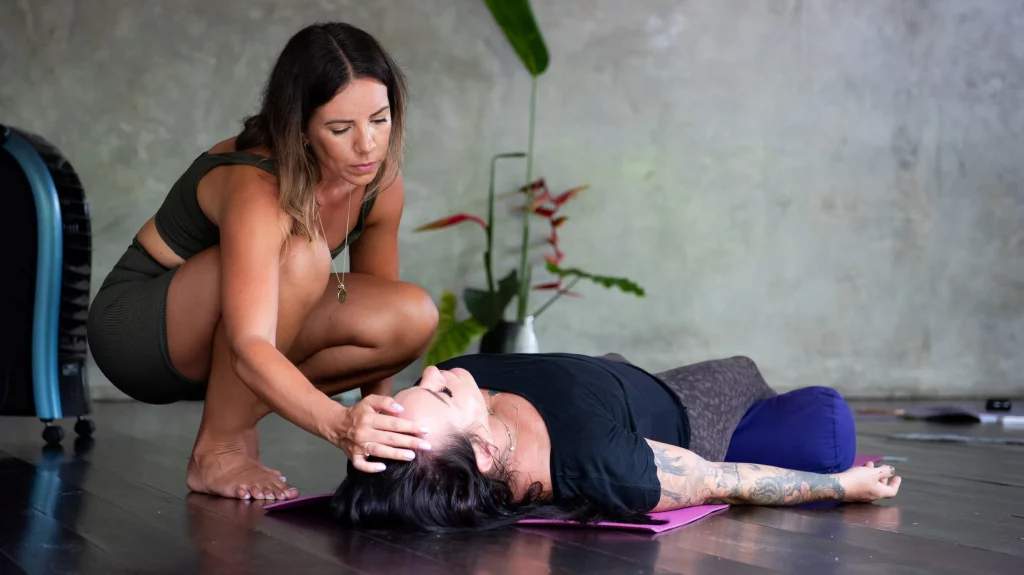
In a large group workshop, a single facilitator cannot monitor the physiological responses of 30 different people. In a private session, your practitioner is attuned to your micro-expressions, your skin tone, and your breathing rhythm. They can tell when you are slipping into a “freeze” response and can gently guide you back to a state of safety.
Personalized Titration
Everyone’s nervous system has a different “bandwidth.” A private facilitator adjusts the intensity of the music, the verbal cues, and the breathing pace specifically for you. This prevents Energetic Overwhelm, ensuring that you leave the session feeling integrated and empowered rather than fragmented.
Physical Touch and Grounding
During a session, practitioners often use “bodywork” or grounding touch to help move stuck energy or calm a hyper-active response. This level of hands-on support is only possible in an intimate, private environment—a hallmark of the high-level service we prioritize in Bali.
Integration: The Often-Forgotten Safety Step
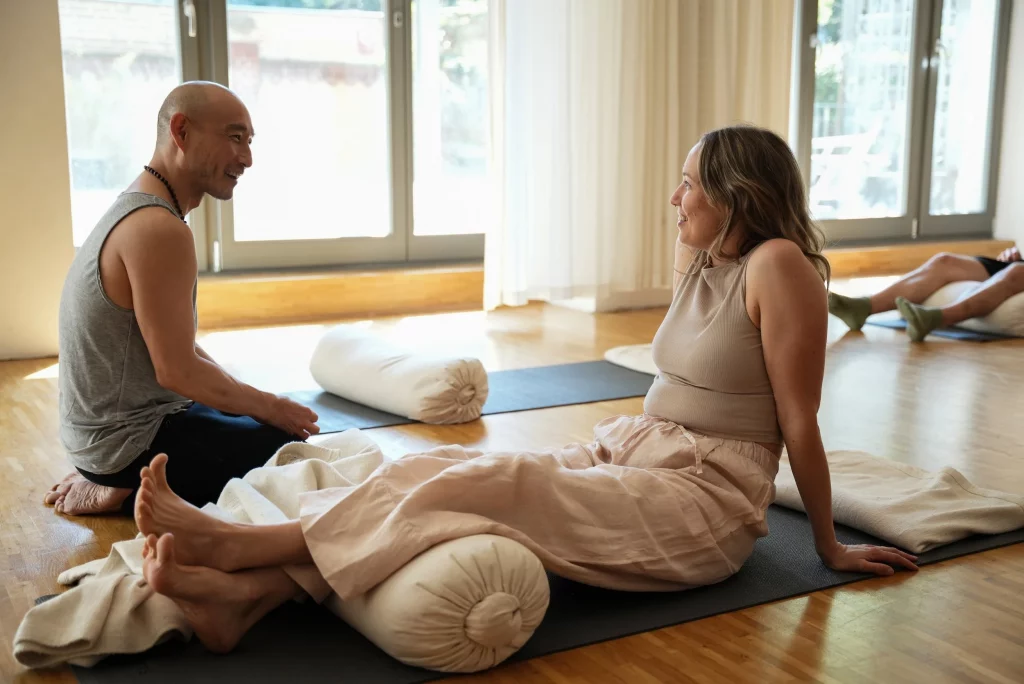
Safety doesn’t end when the session does. A private session allows for a 15–20 minute debrief where you can vocalize your experience. This helps the brain “map” the journey, turning a spiritual experience into a practical tool for daily life.
“The breath is a scalpel; in the hands of a master, it heals. In the hands of the unguided, it can simply open wounds without closing them.”
FAQ: Breathwork Safety & Experience
For some, the physical sensations (tingling, fast heart rate) can mimic a panic attack. However, under the guidance of a private facilitator, these sensations are reframed as a “release.” A professional will teach you how to use your breath to dial the intensity up or down, giving you a sense of agency you don’t have during a random panic attack.
Tetany is the involuntary contraction of muscles (often “lobster claws” in the hands) caused by the CO2 shift mentioned earlier. While it can feel strange or even slightly uncomfortable, it is not dangerous and usually subsides within minutes of returning to a normal breathing rhythm.
Look for practitioners who have completed certified training (at least 200–400 hours) and who ask for your medical history before starting. A hallmark of an expert is their ability to explain the science behind the breath, not just the “vibes.”
Gentle functional breathing (nasal breathing, slow exhales) should be done every day. However, high-intensity “circular” or “transformative” breathwork is like a heavy gym workout for the nervous system. We recommend 1–2 deep sessions per week to allow for proper integration.
Yes, but it must be managed. Actually, many breathwork techniques (like the Buteyko method) are designed to help asthma. Always have your inhaler nearby, and ensure your private instructor is aware so they can focus on soothing, bronchodilating techniques.
Conclusion: Honor Your Vessel
Your journey into the “Inner Space” through breathwork is one of the most rewarding gifts you can give yourself. By honoring the contraindications and choosing an expert-led private container, you ensure that your experience in Bali is one of profound healing and absolute safety.
At Private Class Bali, we specialize in these bespoke, high-authority containers. We don’t just guide breaths; we guard the nervous system.
Contact us on whatsapp to plan your private breathwork session in Bali!