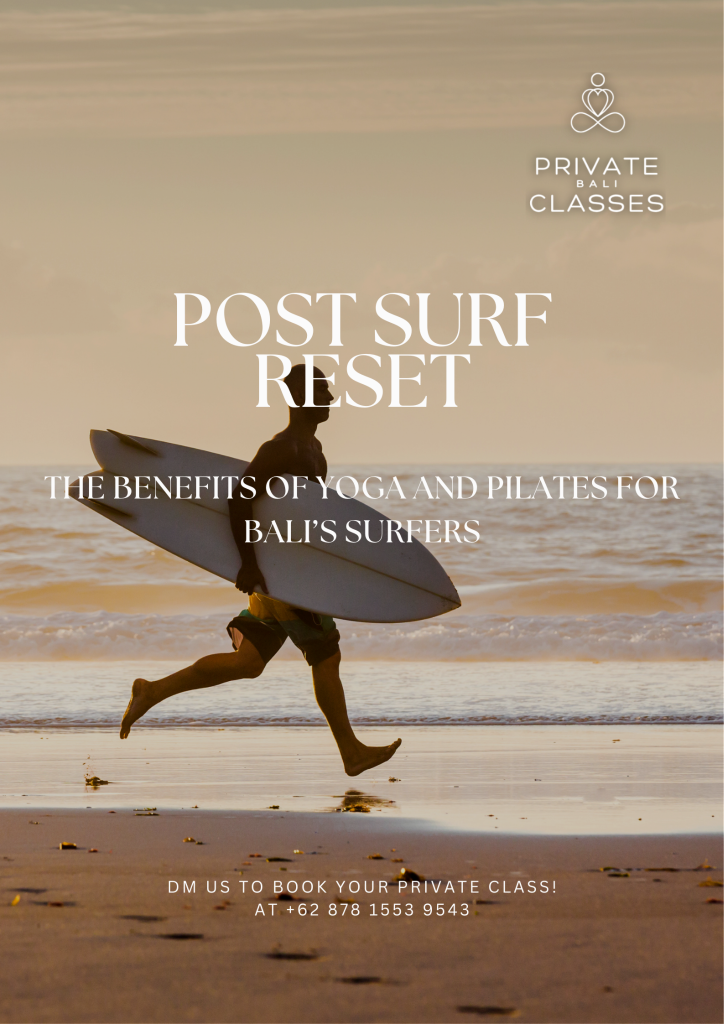
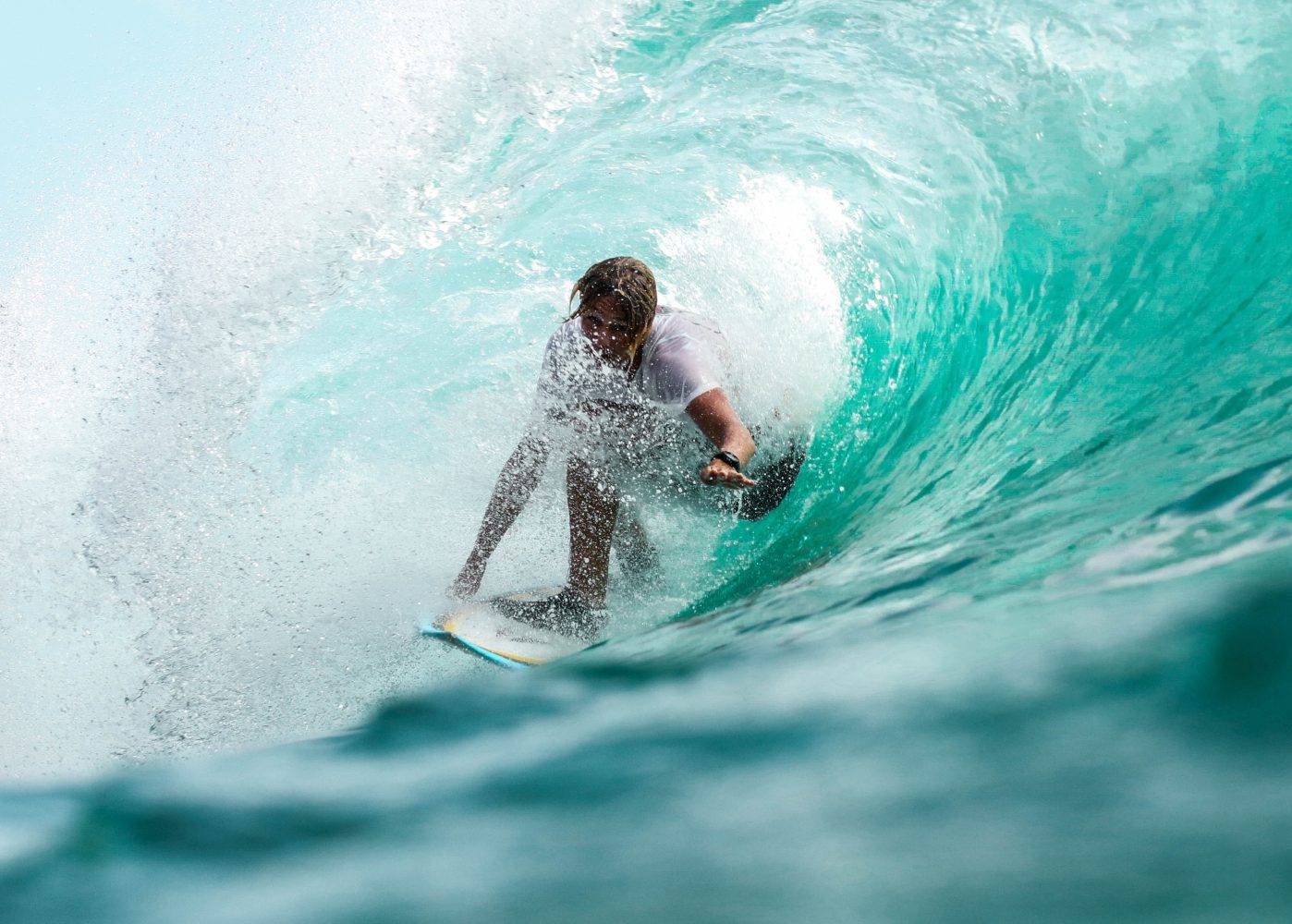
Bali is the undisputed “Mecca” of the surfing world. From the world-class barrels of Uluwatu to the long, peeling waves of Canggu, surfers flock here to test their mettle against the Indian Ocean. However, hours spent paddling, duck-diving, and popping up take a significant toll on the physical body.
In the yoga and wellness world, we often speak about balance. For a surfer, that balance isn’t just found on the board—it’s found in how they recover on land. While many turn to Yoga for flexibility, an increasing number of elite athletes and soul-surfers are turning to Pilates as their secret weapon for longevity and performance.
The Biomechanics of Surfing: Where the Strain Begins
Surfing is a sport of extremes. It requires explosive power (the pop-up), extreme spinal extension (paddling), and high-velocity rotation (turns). This unique combination often leads to specific physical imbalances:
- Paddler’s Neck and Back: Constant arching while paddling creates “hyper-extension” in the lumbar and cervical spine, leading to compressed vertebrae and tight hip flexors.
- Shoulder Impingement: The repetitive internal rotation of the paddling stroke can lead to instability in the rotator cuff.
- Asymmetrical Stance: Whether you are “regular” or “goofy,” you are always twisting in one dominant direction, which can lead to pelvic rotation and muscle imbalances.
Why Yoga and Pilates? The Power of the “Powerhouse”
In Yoga and Pilates, we refer to the core as the “Powerhouse.” Unlike traditional gym crunches, Pilates focuses on the deep stabilizing muscles: the transverse abdominis, the multifidus of the spine, and the pelvic floor.
For a surfer in Bali, a strong powerhouse is the difference between a controlled ride and a “wipeout.”
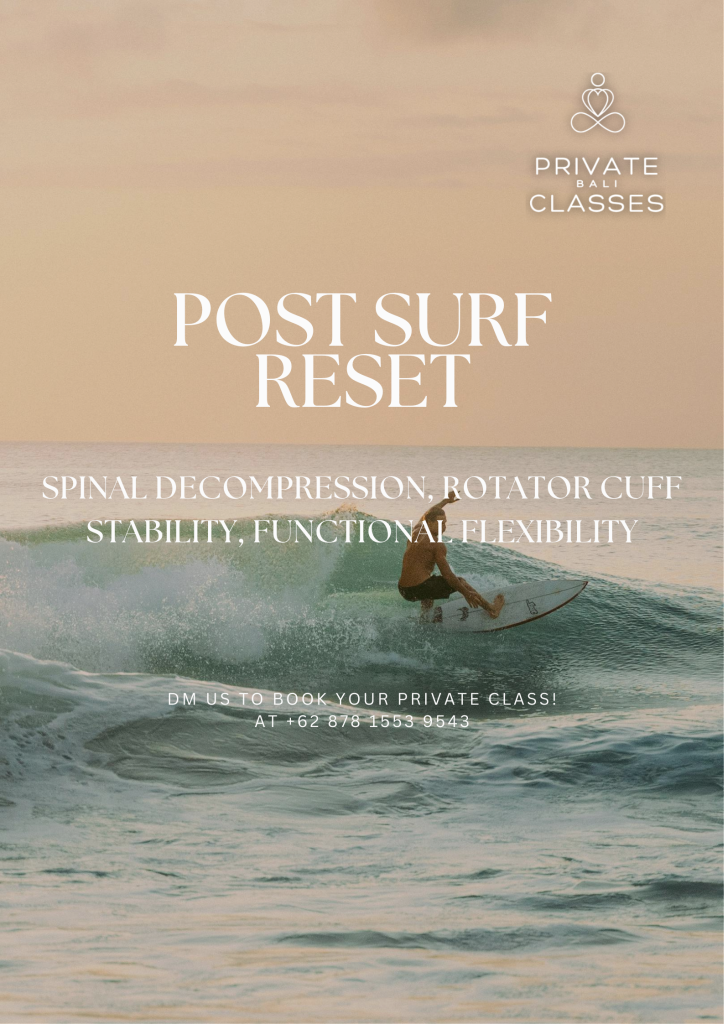
1. Spinal Decompression and Health
Surfing keeps the back in a “C-shape” extension for 90% of the session. Pilates introduces controlled flexion and lateral movement, effectively decompressing the spine. By strengthening the tiny muscles surrounding the vertebrae, Pilates provides a “buffer” that protects the back during heavy falls or long paddle-outs at spots like Padang Padang.
2. Rotator Cuff Stability
Pilates emphasizes “scapular isolation.” By learning to move the arms while keeping the shoulder blades stable, surfers can develop a more efficient, injury-resistant paddle stroke. This is essential for those planning to surf multiple sessions a day during the Bali swell season.
3. Functional Flexibility
While Yoga focuses on stretching the muscle (increasing length), Pilates focuses on eccentric contraction—strengthening the muscle while it is lengthening. For a surfer, this means “active flexibility.” It allows you to reach for that rail or tuck into a tube with the confidence that your muscles can support your joints at their maximum range of motion.
Integrating Yoga and Pilates into Your Bali Surf Trip
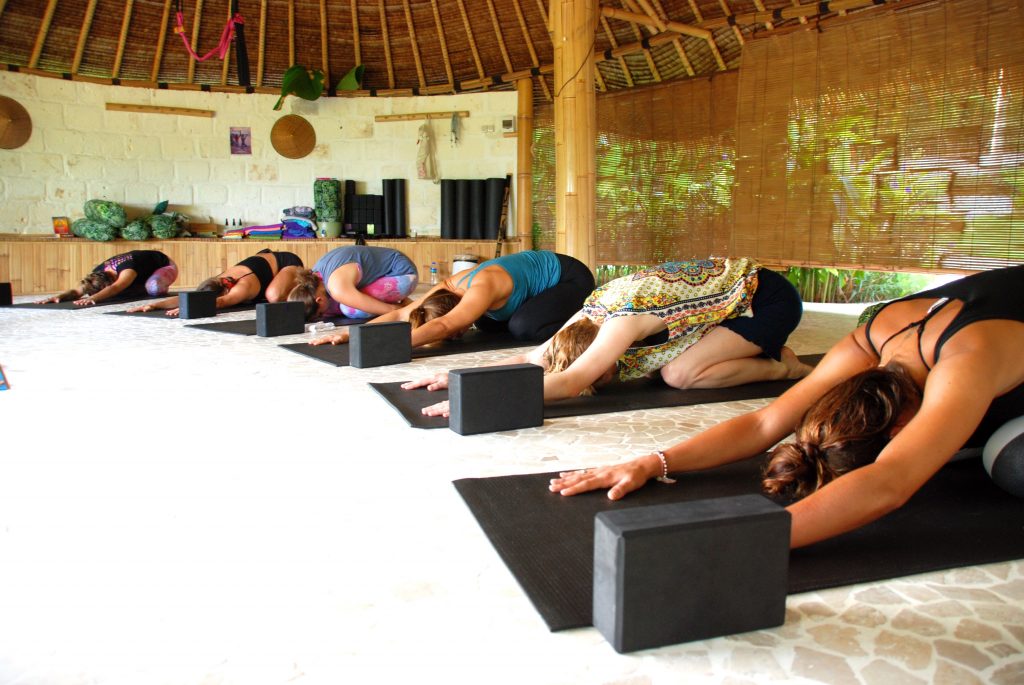
The beauty of the Bali wellness scene is the ability to customize your recovery. While group classes are great for the community, a private class Bali experience allows for a “Surf-Specific Assessment.”
A private instructor can look at your stance, identify which hip is tighter, and create a 60-minute reset that addresses your specific “surf-body” needs. This personalized approach ensures you aren’t just moving; you are correcting.
Recover with yoga from your surf session everywhere in Bali: Canggu, Kuta, Uluwatu, Ubud, Sanur , Seminyak, Seseh, Umalas, and Nusa Dua.
The “Surf-Reset” Pilates Routine: Key Movements
If you are looking to integrate some “Mindful Movement” into your post-surf ritual, focus on these three pillars:
The Swan (Spinal Extension with Control)
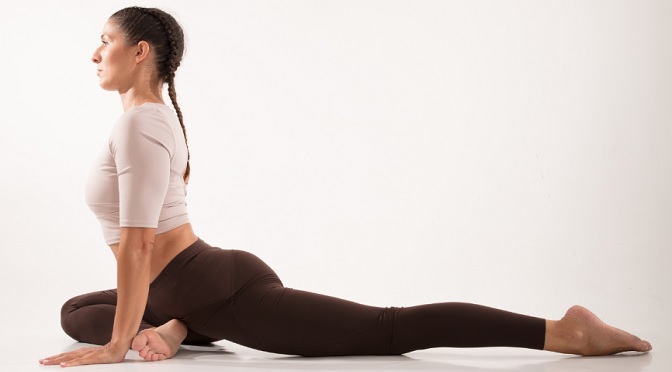
Unlike the passive arch of paddling, the Swan in Pilates teaches you to engage the core while extending the upper back. This protects the lower back and opens the chest, countering the “rounded shoulders” look many surfers develop.
The Saw (Rotation and Hamstring Length)
This move addresses the asymmetrical nature of surfing. It forces the body to rotate through the thoracic spine while keeping the hips grounded, mimicking the movement of a cutback while stretching the hamstrings.
Single Leg Circles (Pelvic Stability)
Vital for your “pop-up.” This move teaches you to move your legs independently of your torso, ensuring that when you jump to your feet, your core remains the stable anchor point.
The Mental Edge: Concentration and Control
Joseph Pilates originally called his method “Contrology.” It requires intense focus, much like the “Flow State” experienced when riding a wave. By practicing the eight principles of Pilates—Concentration, Control, Center, Fluidity, Precision, Breath, Imagination, and Intuition—surfers can train their nervous system to remain calm under pressure.
In the wellness industry, we call this the “Mind-Body Connection.” When you are caught in a “set” at Keramas, the ability to control your breath and engage your deep core is what keeps you safe.
Comparison: Yoga vs. Pilates for Surfers
| Benefit | Yoga (Hatha/Vinyasa) | Pilates (Mat/Reformer) |
| Primary Focus | Flexibility & Spiritual Connection | Core Strength & Structural Alignment |
| Breath Work | Pranayama (Expanding life force) | Lateral Thoracic (Power & Stability) |
| Injury Prevention | High (Great for muscle tension) | Extreme (Fixes structural imbalances) |
| Recovery Type | Passive/Active Stretch | Active Correction |
Elevating Your Performance with Private Instruction
Many surfers find that after a week of intense waves, their bodies feel “locked.” This is where the expertise of a private class Bali session becomes invaluable.
Instead of a generic flow, a private session might involve “prop-assisted” Pilates, using rollers or bands to release the thoracolumbar fascia (the connective tissue in the lower back). It is a bespoke service designed to get you back in the water faster, stronger, and more “aligned” than your first day of the trip
FAQ: Surfing and Yoga and Pilates in Bali
Ideally, a “Pre-Surf” session should be a quick 10-minute dynamic warm-up. A full Pilates session is best “Post-Surf” or on a “Flat Day” to allow the muscles to work through their full range of motion without fatigue.
Yes! The pop-up is essentially a “Plank to Squat” transition. Pilates builds the explosive deep-core strength and hip mobility required to make this transition seamless and fast.
Definitely not. Some of the world’s best male surfers, including legends like Kelly Slater and Mick Fanning, have used Pilates and similar functional movement patterns for decades to stay at the top of their game.
Mat Pilates uses your own body weight and is great for learning “internal” control. Reformer Pilates uses springs for resistance, which can be excellent for building the “pulling” strength needed for paddling.
Pilates is often recommended by physiotherapists for lower back pain. However, it is crucial to work with a qualified instructor in a private class Bali setting to ensure you are not aggravating the area and are instead learning to support the spine correctly.
Conclusion: Longevity on the Board
Surfing in Bali is a gift, but it is a demanding one. To continue enjoying the island’s legendary breaks for years to come, we must treat our bodies with the same respect we give the ocean.
By integrating Yoga and Pilates into your routine, you aren’t just “working out.” You are performing a structural reset. You are ensuring that your “Powerhouse” is strong enough to handle whatever the Indian Ocean throws your way.
Want to customize your own “Surf-Recovery” plan with an expert?
Contact private class bali now!
While you are in Bali, we suggest getting a full wellness experience in this magic island.
Enjoy our private classes and wellness experiences : Private yoga, Private Aqua Yoga , Tai-Chi and Qigong, Pilates, private breathwork , meditation session .
We have private sound healing session too . And our favourite : floating sound healing in your pool
Or book one of our amazing mobile events, directly to your villa : Private Cacao ceremony , private fire ceremony , Private Melukat water purification.
Need healing ? You can check our Reiki and Kundalini activation