In the evolving landscape of the Bali wellness scene, one discipline has stood the test of time as the gold standard for physical alignment and functional strength: Pilates. While often seen as a neighbor to Yoga, Pilates is a distinct, scientifically-driven method that has transformed from a rehabilitative tool into a global movement phenomenon.
At Private Class Bali, we believe that education is the foundation of any successful practice. This guide delves into the essence of Pilates, exploring its origins, its unique methodology, and why it is the perfect complement to an island lifestyle focused on longevity and vitality.
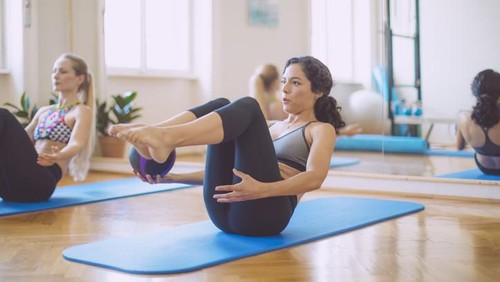
What is Pilates? The Art of Contrology
Originally named “Contrology” by its creator, Joseph Pilates, in the early 20th century, Pilates is a physical fitness system that emphasizes the balanced development of the body through core strength, flexibility, and awareness.
Unlike high-impact workouts that can strain the joints, Pilates focuses on small, controlled movements. The goal is not just to build muscle, but to create a “uniform development” of the body, ensuring that every muscle group—even the tiny stabilizers—is functioning in harmony.
The Six Fundamental Principles
To understand Pilates is to understand its core philosophy. Every movement is governed by these six concepts:
- Centering: Bringing the focus to the “Powerhouse” (the area between the ribs and the hips).
- Concentration: Giving full attention to the movement to reap maximum benefits.
- Control: Every exercise is performed with deliberate, calculated effort.
- Precision: It’s not about how many reps you do, but how perfectly you execute each one.
- Breath: Using the breath to fuel the muscles and keep the mind present.
- Flow: Transitions between movements should be smooth and graceful.
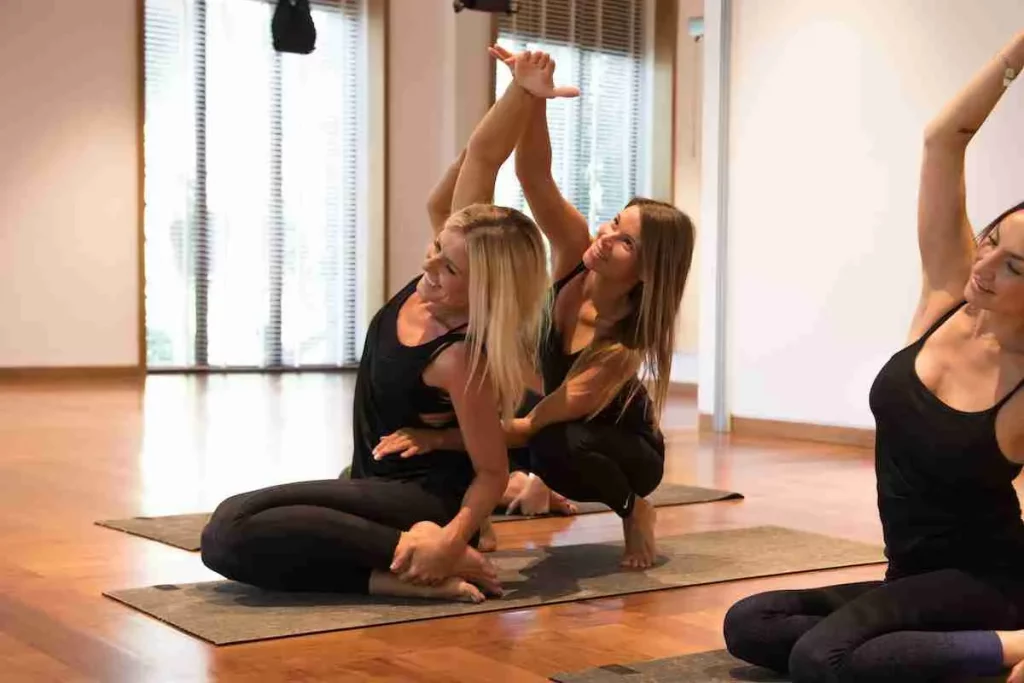
The “Powerhouse”: More Than Just Abs
In the wellness industry, we often talk about “the core,” but in Pilates, we refer to the Powerhouse. This isn’t just your six-pack muscles; it includes the deep abdominals (transverse abdominis), the lower back, the pelvic floor, and the muscles around the hips.
By strengthening the Powerhouse, you create a solid foundation for the rest of your body. This is why many professional athletes and dancers incorporate Pilates into their routines—it provides the structural integrity needed to prevent injury and improve performance in other sports or daily activities.
Mat vs. Reformer: Which is Right for You?
When exploring private class Bali options, you will likely encounter two main types of Pilates. Both offer incredible benefits, but they utilize different “tools” for resistance.
1. Mat Pilates
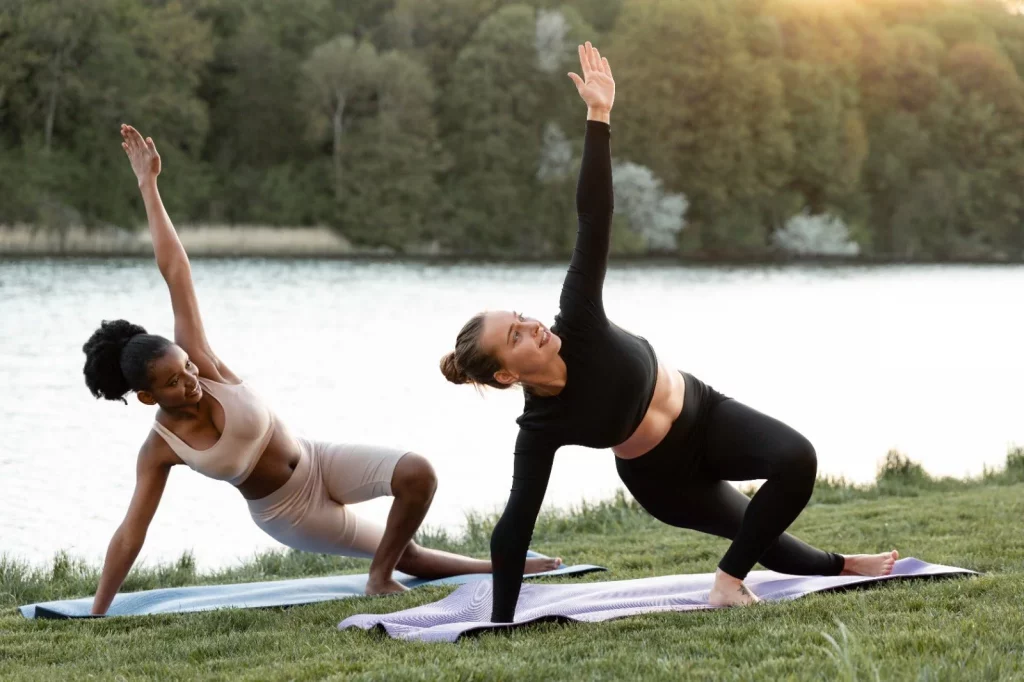
This is the “purest” form of the method. Using your own body weight as resistance, Mat Pilates challenges your stability and control. It is highly accessible and can be practiced anywhere—from a beachfront villa to a lush jungle deck. It is particularly effective for learning the foundational “C-curve” and pelvic placement.
2. Reformer Pilates
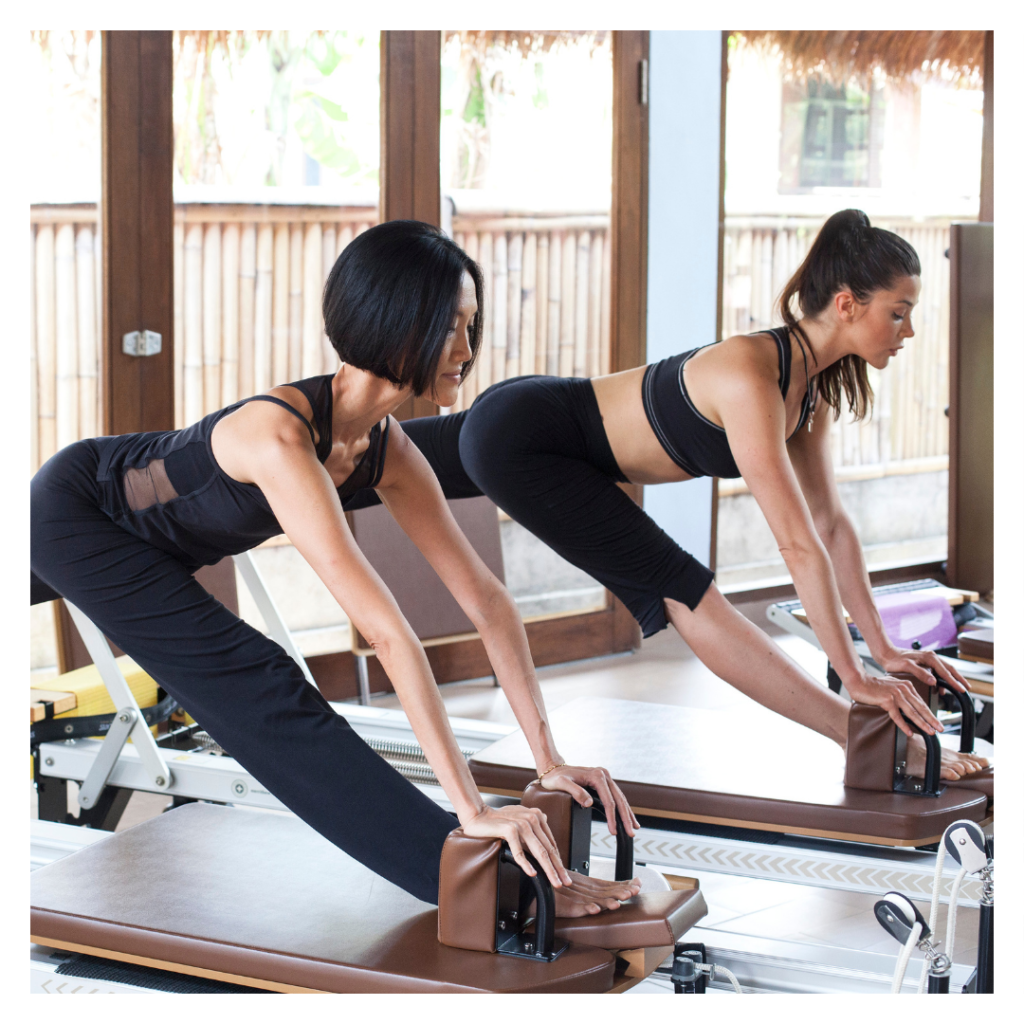
The Reformer is a sophisticated piece of equipment involving a sliding carriage, springs, and pulleys. The springs provide adjustable resistance, which can either make an exercise more challenging or provide support for beginners.
- The Benefit: The Reformer allows for a greater range of motion and helps track alignment more precisely than a mat.
The Holistic Benefits of a Pilates Practice
While the aesthetic results of Pilates (long, lean muscles and improved posture) are well-documented, the internal benefits are where the true magic lies.
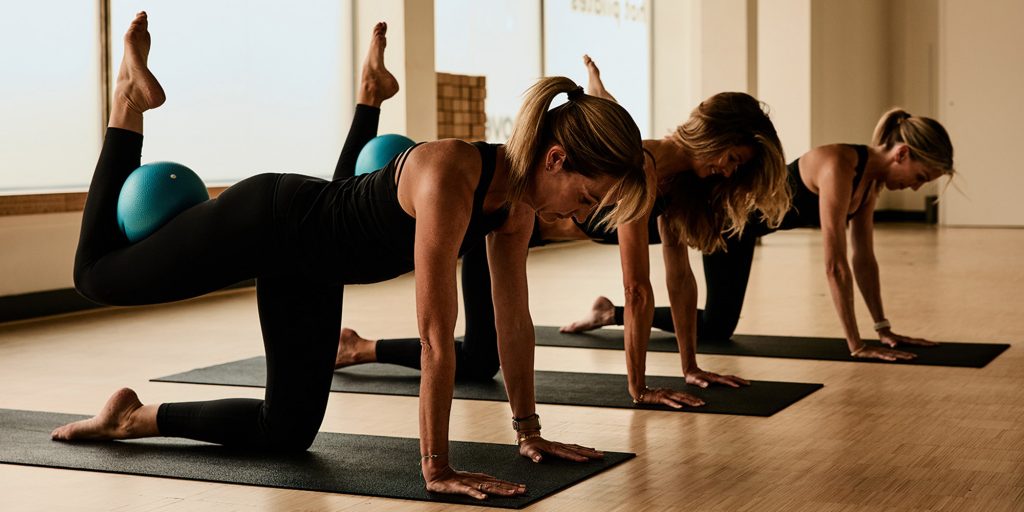
Correcting “Tech Neck” and Posture
In our modern era, many of us suffer from “postural slump” due to hours spent at desks or on phones. Pilates targets the muscles that pull the shoulders back and down, lengthening the spine and “decompressing” the vertebrae.
Mind-Body Connection
Similar to Yoga, Pilates requires deep mental focus. You cannot “zone out” during a session. This concentration acts as a form of moving meditation, reducing stress and improving neurological pathways between the brain and the muscles.
Pelvic Floor Health
Pilates is one of the few fitness modalities that specifically targets the pelvic floor. This is essential for pre-and post-natal recovery, as well as general core stability and longevity.
Pilates vs. Yoga: What’s the Difference?
This is perhaps the most common question in the wellness world. While both emphasize the mind-body connection and breath, they have different “end goals.”
- Yoga is often an inward, spiritual journey. It focuses on flexibility, static holds (Asanas), and achieving a state of “oneness.”
- Pilates is more of an outward, physical conditioning system. It focuses on strength, rhythmic movement, and anatomical precision.
Pro-Tip: They are not mutually exclusive! Many practitioners find that the core strength gained in Pilates significantly improves their balance and stability in Yoga poses.
Private Pilates in Bali ? Canggu, Seminyak , Uluwatu, Ubud , Nusa Dua , Sanur, Kuta ?
Send us a message !
The Bali Advantage: Why Practice Here?
Bali has become a global hub for Pilates because the environment mirrors the practice’s goals: Balance and Harmony.Practicing in a tropical setting allows the muscles to warm up more quickly, increasing flexibility and reducing the risk of strain. Furthermore, the island’s emphasis on “Slow Living” aligns perfectly with the Pilates principle of “Precision over Speed.” Whether you are looking for a deep-tissue release or a sweat-inducing core session, the energy of Bali provides the perfect backdrop for transformation.
FAQ: What People Are Asking About Pilates
While Pilates is primarily a strengthening and toning workout, it helps increase lean muscle mass. Muscle burns more calories at rest than fat, so a consistent practice boosts your metabolism. When paired with a healthy lifestyle, it is an excellent tool for body composition changes.
Yes! In fact, Joseph Pilates originally designed many of these movements for rehabilitation. Because it strengthens the deep supporting muscles of the spine, many doctors and physiotherapists recommend Pilates for those with chronic lower back issues. However, it is always best to start with a private instructor who can modify exercises to your specific needs.
Not at all. Joseph Pilates was a gymnast and a boxer, and he originally taught his method to soldiers and police officers. Today, many male professional athletes (including NFL and NBA players) use Pilates to improve their agility and core power.
As Joseph Pilates famously said: “In 10 sessions you’ll feel the difference, in 20 sessions you’ll see the difference, and in 30 sessions you’ll have a whole new body.” We recommend 2–3 sessions a week for optimal results.
No. Flexibility is a result of Pilates, not a requirement. The exercises are designed to meet you at your current level of mobility and gradually expand it.
Elevate Your Practice
The beauty of Pilates is its adaptability. It is a practice that meets you where you are—whether you are recovering from an injury, training for a marathon, or simply wanting to feel more “connected” to your physical self.
At Private Class Bali, we believe that the most effective way to learn is through personalized attention. A private setting allows you to master the nuances of the “Powerhouse” without the distractions of a crowded studio, ensuring that every breath and every movement is working toward your highest well-being.
Enjoy our private classes and wellness experiences : Private yoga, Private Aqua Yoga , Tai-Chi and Qigong, Pilates, private breathwork , meditation session .
We have private sound healing session too . And our favourite : floating sound healing in your pool
Or book one of our amazing mobile events, directly to your villa : Private Cacao ceremony , private fire ceremony , Private Melukat water purification.
Need healing ? You can check our Reiki and Kundalini activation